Dental Treatment in Istanbul: A UK Patient Planning Checklist
Dental treatment in Istanbul can be an option for UK patients exploring restorative or cosmetic dentistry abroad, but a successful trip begins with thoughtful planning rather than a flight booking. Before choosing a clinic, understand your diagnosis, compare treatment alternatives, ask who will provide care and agree what happens when you return home. This practical checklist focuses on decisions that matter to patient safety, clear communication and long-term dental health, whether you are considering a single restoration or more extensive work.
It is not a promise of treatment suitability, a diagnosis or a fixed travel schedule. Your dentist should assess your mouth, medical history, imaging and personal needs before recommending any procedure. If you have an urgent dental problem, seek timely professional assessment rather than postponing care for travel.
Why plan dental treatment in Istanbul carefully?
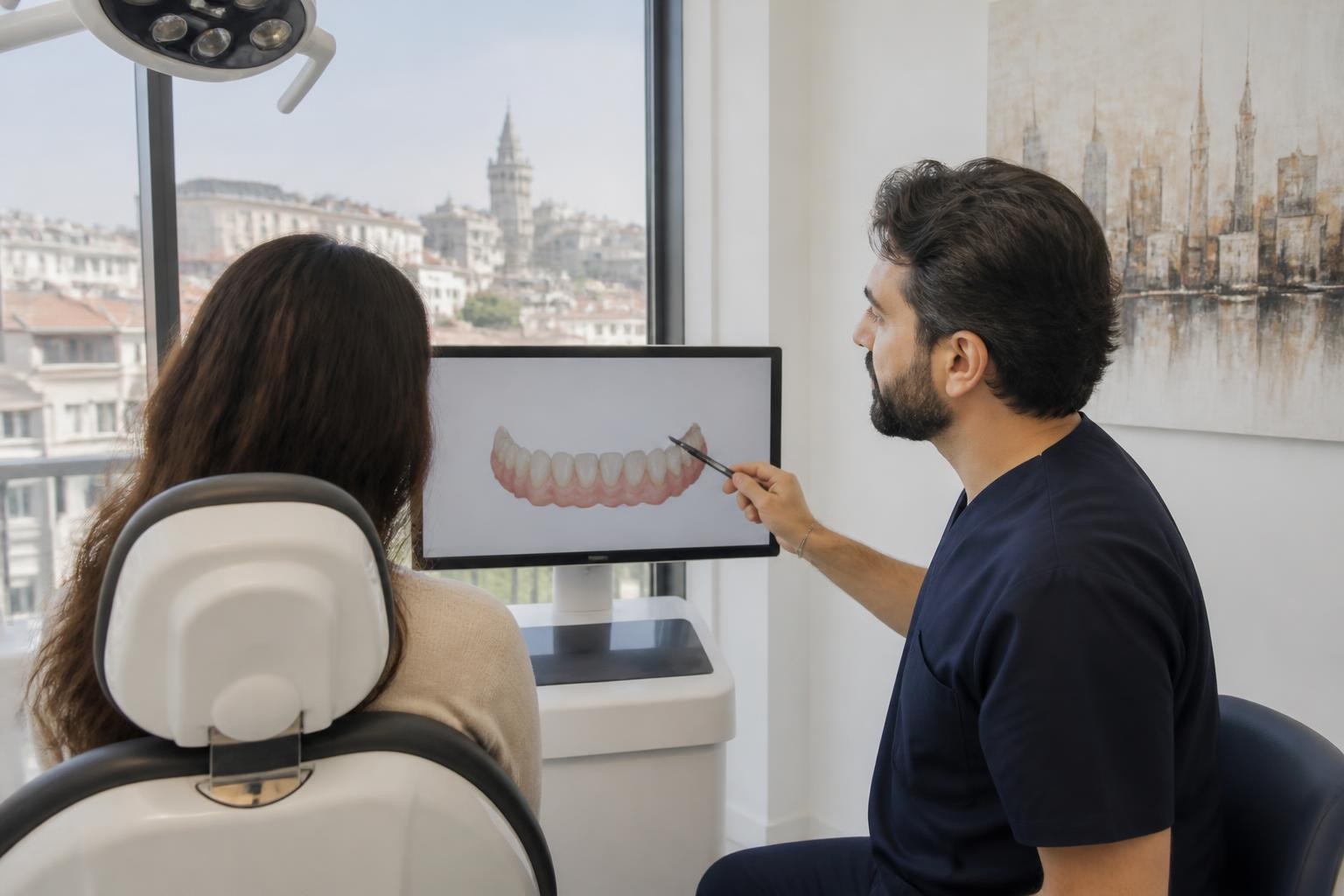
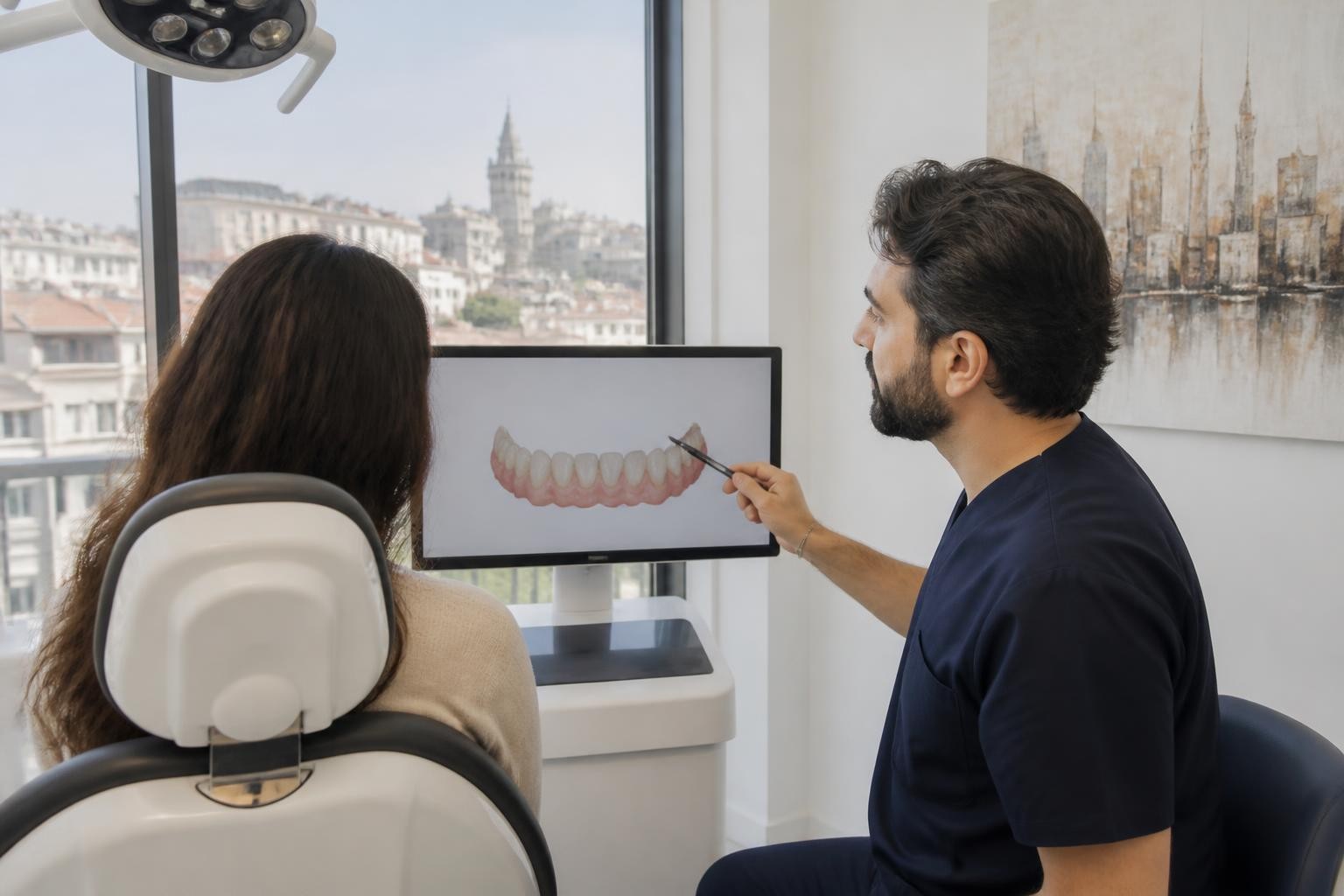
Travelling for dentistry involves two linked decisions: whether a treatment is appropriate and whether it is sensible to receive that treatment away from home. Transport, time away from work, follow-up appointments and access to emergency care can all affect the experience. A clinic’s website and photographs are useful starting points, but they cannot replace an individual clinical assessment.
An apparently straightforward smile makeover may require treatment of decay, gum inflammation or bite problems first. Similarly, a missing-tooth consultation may reveal options other than an implant. A good plan explains these possibilities and gives you enough time to consider them without pressure.
Start with your reason for seeking care
Write down the specific concern: pain, difficulty chewing, missing teeth, worn restorations, discolouration or an aesthetic change. Decide which outcomes matter most to you, and which limitations you would accept. Bring existing dental records if available and ask whether a second opinion from your local dentist would be useful.
Separate the consultation from a final treatment decision
A remote discussion can help explain possible approaches, but photographs rarely show gum health, underlying bone, hidden decay or bite relationships adequately. Do not assume that an online estimate is a diagnosis. A plan may change after examination and appropriate radiographs in Istanbul.
Step 1: Check the dental clinic and the treating clinician
Before paying a deposit, establish the exact legal name and address of the healthcare provider, who will examine you, and who will carry out each proposed procedure. Ask about relevant training, professional registration, the clinic’s authorisation and the process for obtaining an independent opinion. A marketing brand is not necessarily the name of the licensed clinical provider.
Find out whether consultations and consent discussions can take place in a language you understand. If interpreting is needed, ask how it will be arranged. Treatment plans and important instructions should be intelligible to you, including the discussion of potential benefits, risks and alternatives.
The UK General Dental Council provides specific questions for people considering dental care abroad. Use its guidance as an independent starting point: Going abroad for dental treatment.
Step 2: Request a written, itemised treatment proposal
A useful proposal identifies the problem being treated, the intended procedure for each tooth or area, the materials being considered, the expected sequence of visits and what remains provisional. Ask whether preservation of natural teeth has been considered and whether less invasive approaches might reasonably address your goals.
Questions to include in your written request
- Which teeth or areas need treatment, and why?
- What clinical examinations or scans are needed before the plan can be confirmed?
- What are the reasonable alternatives, including doing nothing for now?
- Which materials and implant systems, if relevant, are proposed?
- How many separate appointments or journeys might be required?
- What complications or limitations should I understand?
- Who will provide follow-up care after I return home?
Ask for the quotation to distinguish clinical fees from potential additional expenses. The final amount may depend on findings during examination. A written quote should describe whether imaging, laboratory work, temporary restorations, medicines and review visits are included, rather than using a vague package label.
Step 3: Understand the proposed dental procedure
Different dental treatments require different preparation and follow-up. For example, composite bonding in Istanbul is not the same as a porcelain veneer, and either may have different indications from a crown. Choosing between them should reflect tooth condition and functional needs rather than appearance alone.
Veneers and aesthetic restorations
If you are researching veneers, ask how much tooth preparation may be needed, what material is proposed and how the bite will be evaluated. Discuss sensitivity, chipping, repair and eventual replacement. Read the site’s dental veneers overview and E-Max veneers guide for treatment-specific background, but confirm the suitability of either option through a professional examination.
Dental implants and extensive restoration
Implant planning requires careful evaluation of bone, gums, medical factors and the proposed prosthesis. Surgery and final restoration may be separate stages. An implant is not automatically appropriate for every missing tooth, and healing cannot be guaranteed on a fixed date. For more detail, see the full-mouth dental implants guide.
Patients considering full-arch treatment should also understand whether any temporary teeth are planned, what cleaning will involve and whether further adjustments may be needed. Keep the distinction between a provisional restoration and the final prosthesis clear in writing.
Step 4: Plan travel around the clinical schedule
Avoid buying non-refundable tickets solely on the basis of an estimated number of treatment days. Your clinician may require additional investigation, healing or review appointments. Confirm when you should arrive for the first assessment, how much flexibility you should allow and when the treating dentist considers travel home appropriate.
Think about accommodation close to the treatment location, transport time, accessibility and whether a companion would help after a procedure. If sedation is discussed, ask about the specific arrangements and restrictions on driving, travelling alone or making important decisions afterwards. Never assume the same advice applies to every procedure.

A practical pre-departure checklist
- Confirm the provider’s current clinic address directly before travelling.
- Share a complete medical history, current medicines and any allergies with the treating team.
- Ask whether existing X-rays are useful and how to transfer records securely.
- Obtain the appointment schedule in writing.
- Check passport, visa or entry requirements applicable to your nationality.
- Confirm what your travel insurance actually covers.
- Allow flexibility for clinical changes and potential extra appointments.
- Arrange a contact person and practical support if your procedure requires it.
The NHS treatment abroad checklist emphasises informed decisions, possible complications, insurance and suitable recovery time before returning home. These considerations are as important as transport arrangements.
Step 5: Discuss risks, consent and realistic expectations
No restorative or cosmetic procedure is risk-free. Possible concerns depend on the treatment and may include discomfort, sensitivity, infection, damage to restorations, healing problems or an outcome that requires adjustment. Ask the dentist to explain the risks relevant to your circumstances and to document how complications would be managed.
Be cautious of guaranteed outcomes, universal claims that treatment is painless, or promises that one technique is always better. Dental materials can perform well in appropriate cases, but longevity depends on the clinical situation, home care, bite, habits and ongoing maintenance. Before-and-after photographs cannot predict your personal result.
Understand consent and payment terms
You should know what is optional, what can change after diagnostic assessment and when payments become due. Ask what happens if the proposed treatment cannot proceed, if further treatment becomes necessary or if you choose not to continue. Keep written copies of the information you received and agreements you accepted.
Step 6: Arrange aftercare before leaving the UK
Aftercare is a core part of dental treatment, not an optional extra. Ask whether your local UK dentist can provide routine assessments after treatment abroad, and what information they would require. Do not assume any clinician is obliged to take over complex maintenance or corrective work. Establish an emergency route for urgent dental concerns at home.
Ask the overseas team how post-treatment questions will be handled, whether remote communication is available and when in-person review is essential. A photograph sent by message cannot replace an examination when there is persistent pain, a changing bite, suspected infection or a loose restoration.
Records to request before you fly home
- A summary of the diagnosis and treatment performed.
- A tooth-by-tooth or area-by-area treatment record where applicable.
- Copies of relevant scans, radiographs and reports that can be shared.
- Names and details of materials and implant components, if used.
- Medication instructions and a record of any prescriptions.
- Written guidance on eating, cleaning, activity and expected follow-up.
- A clear contact route for routine queries and urgent concerns.
Store these documents securely and share them only with professionals involved in your care. If symptoms worsen or you develop significant swelling, uncontrolled bleeding, fever or difficulty swallowing or breathing, seek urgent local medical or dental assistance instead of relying only on messages to an overseas clinic.
Step 7: Compare the total cost, not just the headline quote
Price comparison is meaningful only when two quotations include comparable care. Consider diagnostics, necessary preliminary treatment, materials, the number of visits, temporary work, final restorations, medicines, review appointments and possible repair costs. Add the realistic cost of travel, accommodation, time away from work and an unexpected return visit.
Do not infer that a higher price guarantees a better outcome or that a lower price means poor quality. Instead, compare the clinical reasoning, documented responsibilities, transparency and suitability of the proposed options. Ask how payment, cancellation and refunds are handled before making a commitment.
Step 8: Prepare questions for a dental consultation in Istanbul
A productive consultation is a conversation rather than a sales presentation. Describe your priorities and ask the dentist to explain findings in plain language. Request enough time to understand why each tooth needs treatment and whether the plan would change if a new issue is discovered.
It can help to bring a written list of questions. Include whether treatment can be staged, which outcomes are uncertain, what a realistic recovery process may involve, how your bite will be checked and what maintenance will be required over the next several years.
If you would like to explore an initial enquiry, use the Dentist in Taksim contact page and ask for the current clinic location and treating provider details before planning travel. A remote enquiry is an information-gathering step, not a confirmed clinical assessment.
Frequently asked questions
Can I receive a final dental treatment plan from photographs alone?
Usually not. Photographs may help explain concerns, but a qualified dentist often needs an examination and suitable imaging to assess gums, teeth, bone and bite. Any remote proposal should be presented as provisional.
How long should I stay in Istanbul for dental treatment?
There is no universal duration. The necessary appointment schedule and appropriate time before flying depend on the procedure, your health and how you recover. Obtain individual advice before booking a departure date.
Should I choose veneers, crowns or composite bonding?
Each option serves different clinical needs. A dentist should explain tooth preservation, strength, appearance, limitations and maintenance for your specific case. A cosmetic preference alone is not enough to determine the best approach.
Do dental implants require another visit?
Some implant plans involve separate surgical, healing and restorative stages. Others have different protocols. Your dentist should provide a realistic schedule and clarify which elements are provisional and which are final.
Can I use a UK dentist for follow-up?
You can ask a UK practice whether it can assess or maintain treatment performed abroad, but do not assume this is automatically available. Agree the division of responsibilities and obtain treatment records before travelling.
What should I do if I have complications after returning home?
Contact the treating provider and seek prompt local professional assessment when necessary. Serious symptoms need urgent care. Do not delay urgent treatment while waiting for a remote reply.
Make an informed start to your Istanbul dental enquiry
Dental treatment abroad deserves the same careful decision-making as treatment at home. Ask for clear clinical explanations, verified provider details, transparent costs and an achievable aftercare plan. These steps help you make a considered choice without relying on unrealistic promises.
Have questions about dental treatment in Istanbul? Contact the team to discuss the information you may need for an initial assessment, request current clinic details and learn how to arrange a consultation. Send a WhatsApp enquiry. The number is taken from the website’s existing contact page and should be confirmed before publication.


