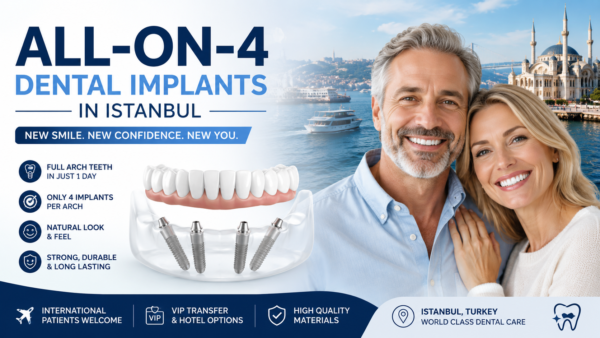
All-on-4 Dental Implants in Istanbul: An International Patient Guide
All-on-4 dental implants in Istanbul may be considered for some people missing most or all teeth in one jaw. The treatment concept uses strategically positioned implants to support a full-arch prosthesis. It is not a universal solution, and the number of implants, type of restoration, need for surgery and appointment stages must be determined through individual assessment. This guide helps international patients from the UK, United States, Canada and Australia understand clinical questions, travel considerations and aftercare before making an irreversible decision. Dentist in Taksim is the established website name; the current clinic address is Merkez Mah., Abide-i Hürriyet Cd., Melis Apt. No:181/B Şişli, Istanbul, Türkiye.
What Does All-on-4 Mean?
All-on-4 describes a full-arch implant concept in which four implants may support a fixed restoration in selected circumstances. Clinical planning considers the implant positions, available jawbone, anticipated chewing forces and design of the final teeth. The term does not mean every person needs exactly four implants, or that four are always sufficient. Different numbers of implants or alternative prostheses may be appropriate. Ask the dentist to explain the clinical reasons for the proposal, which jaw is being treated, and whether the plan involves a temporary or definitive fixed restoration. Marketing terminology should never replace a diagnosis.
Who May Be a Candidate?
A patient with substantial tooth loss or severely compromised teeth may be considered for full-arch treatment, but remaining natural teeth should be assessed carefully. Removing teeth is irreversible, and alternatives that preserve teeth may be reasonable in some circumstances. Medical conditions, medicines, bone and gum health, oral hygiene and smoking history can affect suitability and healing. A qualified dental professional must evaluate these factors. If you have been told that all remaining teeth must be extracted, ask which teeth are no longer maintainable and what alternative treatments have been considered. A second opinion may be particularly useful before extensive surgery.
Assessment and Diagnostic Imaging
A thorough consultation usually includes a dental and medical history, clinical examination and appropriate imaging. The treating dentist considers jawbone conditions, nearby anatomical structures, existing infections, bite and any earlier treatment. Imaging can help with planning but requires professional interpretation. A photograph sent through WhatsApp cannot reliably reveal underlying disease, bone dimensions or implant suitability. Ask who will plan the surgical procedure, who will perform each clinical stage and whether additional tests are required. A remote estimate should be clearly presented as provisional and may change after examination. The final approach and consent discussion must reflect actual findings.
Are Four Implants Enough for Everyone?
Not necessarily. The appropriate number and positions depend on jaw anatomy, bone availability, loading conditions, prosthetic design and individual health factors. Some treatment plans involve more implants, grafting or a removable implant-supported solution. A plan might also change if surgical findings are different from expected. The clinician should explain what happens if an implant cannot be placed in the planned location or if additional support is recommended. Do not assume that choosing a package labelled All-on-4 guarantees an identical result. The rationale for the number of implants should be documented in an individual treatment plan.
Comparing All-on-4 With Dentures
Full-arch fixed implant restorations, conventional dentures and implant-retained removable dentures have different benefits, limitations and maintenance requirements. A removable denture avoids some forms of implant surgery, but may present other functional concerns. A fixed implant bridge requires suitable surgical conditions and ongoing cleaning around the restoration. Some people prefer the convenience of removable prostheses for hygiene or maintenance. Neither option should be described as universally superior. Ask about cleaning access, possible repair needs, replacement components and the expected review schedule. A realistic comparison should include clinical risks, costs and the patient’s priorities.
Extractions and Preparatory Procedures
A proposed full-arch plan may include extractions, infection management, periodontal treatment or bone-related procedures. Every extraction should have a clinical justification rather than being included automatically in a standard package. Additional work can affect appointment dates and costs. If a clinician recommends removal of teeth that appear restorable, ask for an explanation of the prognosis and alternatives. Some patients may need more than one surgical stage. Others may require a different prosthetic plan if insufficient bone is present. A revised proposal should be discussed and approved before proceeding with unexpected treatment.
The Surgical Appointment
Surgery is planned after the necessary examination and consent process. The dentist should explain the procedure, anaesthesia, potential risks and the monitoring required for the chosen approach. Sedation or general anaesthesia should never be presumed available or suitable without assessment. Oral surgery can involve postoperative discomfort, swelling, bleeding or infection risk. The clinical team should provide individual written instructions and explain when urgent assessment is required. If an implant cannot be placed as planned, the dentist may need to adjust the proposed treatment. Patients should not be promised a completely painless or risk-free operation.
Immediate Temporary Teeth
Some full-arch implant plans include temporary teeth soon after surgery, often described as immediate loading. This is possible only when clinical circumstances allow it. Factors such as implant stability, bone quality, bite and prosthetic design affect the decision. A provisional bridge is not necessarily the same as a definitive restoration and may require restrictions while healing takes place. Ask whether the quotation includes temporary teeth, what material is used and how they are maintained. If immediate loading is not appropriate, the dentist should explain alternatives rather than forcing the procedure to match an advertising timeline.
Healing and the Final Restoration
Implant integration and tissue healing take time, although the exact schedule varies. Many patients need a later restorative phase to fit the definitive bridge, so international visitors should plan for a possible return journey. The clinician may review healing, fit, hygiene access and bite before completing the final work. Changes to gum contours or other clinical findings can influence the design. Do not assume that temporary teeth are final teeth or that definitive work can always be completed during one holiday. Request a written timeline distinguishing the surgical stage, healing interval, review appointments and final restoration.
Materials and Prosthetic Design
The full-arch prosthesis may use different frameworks and tooth materials depending on the clinical plan. Materials vary in characteristics, repairs, weight, appearance and maintenance needs. Ask which components are proposed, whether the bridge is screw-retained or uses another design, and how a dental professional will access it for review. Implant manufacturer details and component documentation may be important if you receive follow-up care in another country. A named material or brand is not a guarantee of success. Prosthetic design should consider speech, lip support, cleaning access, comfort and long-term function.
All-on-4 Costs in Istanbul
The cost depends on the number and condition of jaws treated, diagnostics, required extractions, bone treatment, implant components, temporary work, final bridge materials, laboratory work and follow-up. Ask for a dated, itemised quotation showing the exact inclusions. Make sure the advertised amount is not limited to the surgery while excluding the final teeth. International patients should include flights, accommodation, transportation, time away from work and a possible second trip. Currency conversion costs and payment terms also matter. Old online price comparisons cannot establish the current cost of your case or the quality of care.
Safety and Questions Before Consent
Ask the treating dentist about infection risk, implant failure, nerve or sinus-related concerns where relevant, prosthesis fracture, gum inflammation and the need for maintenance or replacement. Complications are not limited to this list, and individual risks vary. If a guarantee is offered, read the written conditions and whether a return journey is required for repair. Be cautious about fixed success-rate claims and promises that all patients receive permanent teeth immediately. Before consenting, discuss reasonable alternatives and the potential consequences of delaying treatment. An independent opinion may be useful when many remaining teeth are proposed for extraction.
Travel Planning for UK and European Patients
A short flight distance does not remove the clinical need for staged treatment or aftercare. UK and European visitors should allow adequate time for assessment, appropriate surgery and any required postoperative check before departure. Check official travel requirements and consider whether the clinic recommends limiting activities during recovery. Ask if you may need to return months later for the definitive bridge. Dental care arranged abroad should be discussed with a dentist in your country where possible, since future repairs and maintenance may depend on implant components. Do not assume NHS or private insurance will cover elective overseas work or its complications.
Travel Planning for US, Canadian and Australian Patients
For travellers crossing an ocean or several time zones, the potential need for two trips can significantly affect overall costs and scheduling. Clarify the likely clinical stages before booking expensive, non-refundable flights. Ask your usual dentist whether they can help with future hygiene reviews or prosthetic maintenance, while recognising that not all practices service every implant system. Preserve imaging, implant identification and treatment records. Allow time to recover from the journey before undergoing surgery. Official passport, entry and travel insurance rules should be checked separately from the clinic’s marketing information.
Our Current Şişli Address
The Dentist in Taksim website retains its established name, but the clinic now operates at Merkez Mah., Abide-i Hürriyet Cd., Melis Apt. No:181/B Şişli/İstanbul, Türkiye. It is not located in Taksim Square. Historic articles and some search-engine listings may still mention Taksim, so confirm the actual address before arranging transport. Traffic from Istanbul Airport and Sabiha Gökçen Airport varies, and journey times should not be guaranteed. Use the Contact Us page for current appointment information and directions. Treatment availability, the responsible clinician and the proposed procedure must be confirmed before travelling.
Follow-Up and Cleaning
A fixed implant bridge still requires careful oral hygiene, maintenance and clinical review. Patients should ask how to clean under the prosthesis, whether special tools are recommended and how often reviews should occur. Gum and implant tissue problems can develop even when implants initially heal. Report persistent pain, increasing swelling, loose parts or an uncomfortable bite to a qualified dental professional. Do not attempt to adjust an implant bridge yourself. Before returning home, request records describing the system, prosthesis and postoperative instructions. Plan how any future components, repairs or reviews would be obtained in your home country.
Frequently Asked Questions
Does All-on-4 always use exactly four implants? Four is part of the treatment concept, but a dentist may recommend another design or number in individual cases.
Will my final teeth be ready in one visit? Many cases require a healing interval and later definitive restoration.
Is All-on-4 always better than dentures? No. Suitability depends on anatomy, health, function and personal preferences.
Can a remote consultation confirm the procedure? No. A proper examination and suitable imaging are needed.
Does the treatment involve risks? Yes. Surgical and prosthetic complications are possible and should be discussed before consent.
Where is the clinic? At Abide-i Hürriyet Cd. No:181/B in Şişli, Istanbul.
How do I enquire? Use our contact page.
Contact and Medical Disclaimer
If you are considering full-arch implant treatment, gather your relevant records and ask for a consultation with a qualified dentist. Discuss whether remaining teeth can be preserved, what prosthesis might be suitable, the staged timetable and follow-up requirements. For general information about other options, see full-mouth implants and our international patient planning guide. This content is educational rather than individual medical advice. Eligibility, complications, costs and outcomes differ from patient to patient.
Use the dental treatment quote comparison to check whether a full-arch estimate includes the temporary bridge, final bridge and fitting visits.
Read about the Klinik No1 team in Şişli before arranging an assessment, and use the aftercare checklist to plan reviews and records for your dentist at home.
1 thought on “All-on-4 Dental Implants in Istanbul: Treatment and Travel Guide”
Comments are closed.