
Composite Bonding in Istanbul: Cost, Procedure & Results 2026
Composite bonding in Istanbul has become a popular cosmetic dentistry option for international patients who want to improve the shape, colour, symmetry or overall appearance of their teeth without necessarily choosing porcelain veneers or dental crowns. Also known as dental bonding, composite resin bonding or cosmetic bonding, the procedure can often be completed quickly and may require considerably less alteration of the natural tooth than more extensive restorative treatments.
For patients travelling from the UK and Europe, Istanbul is particularly attractive because of its large dental tourism sector, international flight connections and wide range of cosmetic dental treatments. Composite bonding can potentially be performed as part of a short visit, depending on the number of teeth being treated and the patient’s dental health.
However, composite bonding is not suitable for every cosmetic problem. Patients with extensive decay, severe bite problems, significant tooth damage or certain alignment issues may require alternative treatment.
This complete guide explains composite bonding in Istanbul, including the procedure, costs, expected results, treatment duration, advantages and disadvantages, composite bonding vs veneers, aftercare and what international patients should consider before travelling to Turkey for cosmetic dentistry.
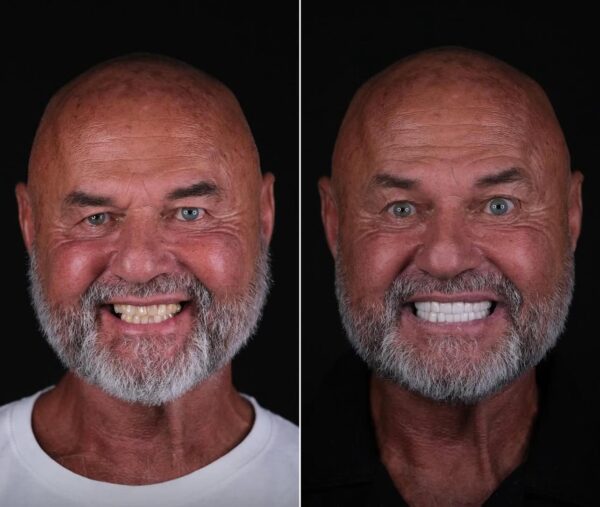
What Is Composite Bonding?
Composite bonding is a cosmetic dental procedure in which a tooth-coloured composite resin material is applied directly to the natural tooth.
The dentist carefully shapes the material to modify the appearance of the tooth before hardening and polishing it.
Composite resin can potentially be used to improve:
- Small gaps between teeth
- Minor chips
- Uneven tooth edges
- Tooth shape
- Tooth length
- Mild asymmetry
- Selected discolouration
- Worn edges
- Small cosmetic imperfections
One of the major attractions of composite bonding is its conservative nature.
In suitable cases, little or no natural tooth structure may need to be removed.
This makes it fundamentally different from treatments requiring more extensive tooth preparation.
Why Choose Composite Bonding in Istanbul?
Istanbul is one of Turkey’s major destinations for international dental treatment.
Patients travel to the city for procedures ranging from routine dentistry to full smile makeovers, dental implants, crowns and veneers.
The advantages of considering composite bonding in Istanbul, Turkey can include access to cosmetic dental clinics, competitive treatment costs and the possibility of completing treatment during a relatively short stay.
Istanbul is also extremely accessible from the United Kingdom.
Direct flights operate from several UK airports, making it possible for many patients to combine dental treatment with a city visit.
Nevertheless, convenience should not replace proper dental assessment.
The condition of the teeth, gums and bite should be evaluated before cosmetic bonding is recommended.
Who Is Suitable for Composite Bonding?
Composite bonding is generally best suited to patients who have relatively healthy teeth but want to correct minor or moderate aesthetic concerns.
Potential candidates may have:
- Small spaces between teeth
- Chipped teeth
- Uneven edges
- Minor shape irregularities
- Teeth that appear too short
- Selected areas of discolouration
- Mild wear
- Slight asymmetry
The dentist should also examine gum health and the patient’s bite.
If the teeth are severely misaligned or heavily damaged, bonding alone may not provide a predictable long-term solution.
Likewise, active decay or gum disease should normally be addressed before elective cosmetic treatment.
Composite Bonding Consultation in Istanbul
A professional consultation should come before treatment.
The dentist needs to understand what you want to change about your smile.
Your teeth and gums can then be examined to determine whether bonding is appropriate.
The consultation may consider:
- Tooth condition
- Existing fillings
- Gum health
- Bite
- Tooth alignment
- Enamel quality
- Tooth colour
- Bruxism or teeth grinding
- Previous dental treatment
- Desired smile shape
Photographs and appropriate dental imaging may also be used when clinically necessary.
International patients sometimes send photographs before travelling to Istanbul for an initial assessment.
These can be useful for preliminary planning, but photographs cannot replace a complete clinical examination.
What Can Composite Bonding Correct?
The versatility of composite resin is one reason the treatment has become so popular.
Chipped Teeth
Small chips can often be rebuilt using composite material matched to the surrounding tooth.
Gaps Between Teeth
Selected small gaps can potentially be reduced or closed by adding composite to the sides of adjacent teeth.
Uneven Teeth
Composite can modify the visible shape and proportions of teeth.
Short Teeth
In appropriate cases, material can be added to create additional visible length.
Worn Tooth Edges
Minor wear may sometimes be restored using composite resin.
Smile Symmetry
Several teeth can be treated together to create a more balanced smile.
The dentist must determine whether each problem is cosmetic or whether underlying structural or bite issues require treatment first.
How Is Composite Bonding Performed?
The exact procedure depends on the individual case, but treatment generally follows several stages.
1. Consultation and Smile Assessment
The dentist examines the teeth and discusses the desired outcome.
2. Shade Selection
A composite shade is selected to complement the natural teeth.
This stage is particularly important when only a few teeth are being treated.
3. Tooth Preparation
The tooth surface is prepared according to the bonding technique being used.
Many cosmetic bonding cases require minimal preparation compared with crowns or traditional veneers.
4. Composite Application
The resin is carefully applied to the tooth.
5. Artistic Shaping
The dentist shapes the material to create the planned length, width, contours and symmetry.
6. Curing
A specialised light is used to harden the composite material.
7. Finishing and Polishing
The bonded tooth is refined and polished to create a smooth surface and natural appearance.
The bite should also be checked before treatment is considered complete.
Does Composite Bonding Require Tooth Shaving?
One reason patients search for composite bonding in Turkey is the possibility of achieving cosmetic improvement with minimal tooth preparation.
In many suitable cases, composite bonding can be performed with little or no significant reduction of healthy tooth structure.
However, “no shaving” should never be guaranteed before examination.
Some cases may require minor adjustments to create appropriate contours or improve the final result.
The amount of preparation should be explained before treatment begins.
How Long Does Composite Bonding Take?
Composite bonding can often be completed relatively quickly.
Treatment time depends on the number of teeth and complexity of the smile design.
A single small repair may be completed during a relatively short appointment.
A larger cosmetic case involving multiple teeth requires more planning and chair time.
For international patients, this can still be attractive because composite bonding generally does not require laboratory fabrication in the same way as porcelain veneers or crowns.
Same-Day Composite Bonding in Istanbul
Some suitable cases can potentially be completed in a single treatment day.
This is one reason composite bonding Istanbul appeals to tourists and international patients with limited travel time.
However, patients should avoid planning an unnecessarily tight itinerary.
A larger smile makeover may benefit from additional time for assessment, treatment and review.
Treatment quality should take priority over completing everything as quickly as possible.
How Many Teeth Should You Have Bonded?
There is no standard number.
Some patients need bonding on only one chipped tooth.
Others may want four, six, eight or more visible teeth modified as part of a cosmetic smile treatment.
The appropriate number depends on:
- Smile width
- Visible teeth
- Existing tooth proportions
- Cosmetic concerns
- Budget
- Desired result
Treating unnecessary healthy teeth simply to reach a predetermined package number should be avoided.
Composite Bonding Cost in Istanbul
The composite bonding cost in Istanbul varies according to the clinic and individual treatment plan.
Pricing can depend on:
- Number of teeth
- Complexity
- Amount of composite required
- Dentist
- Clinic
- Existing dental condition
- Additional treatment
- Whether whitening is performed first
Some clinics quote per tooth, while others may provide a package for multiple teeth.
International patients should request a written treatment plan explaining which teeth are included and whether additional procedures are necessary.
Composite Bonding Turkey vs UK Cost
Cost is one reason British patients investigate cosmetic dentistry in Turkey.
Private cosmetic dental treatment in the UK can become expensive when multiple teeth are treated.
Istanbul may offer lower treatment costs because general operating expenses and healthcare economics differ between Turkey and the UK.
However, price should not be the only factor.
When comparing composite bonding Turkey vs UK, consider:
- Dentist experience
- Composite material
- Number of teeth
- Treatment planning
- Follow-up
- Bite assessment
- Clinic standards
- Repair policy
A low price is not good value if the bonding repeatedly chips or produces an unnatural result.
Composite Bonding vs Porcelain Veneers
Patients frequently compare composite bonding vs veneers.
The treatments can address some similar cosmetic concerns, but they are not identical.
Composite Bonding
Composite resin is applied directly to the tooth.
Potential advantages include:
- Conservative treatment
- Often minimal tooth preparation
- Faster procedure
- Easier repair
- Generally lower initial cost
Potential disadvantages include:
- Greater susceptibility to staining
- Lower resistance to wear than some ceramic restorations
- Periodic polishing or repair may be required
Porcelain Veneers
Veneers are thin ceramic restorations designed to cover the visible surface of teeth.
Potential advantages include:
- Strong aesthetics
- High stain resistance
- Longer-lasting surface finish
- Excellent colour stability
However, veneers may require tooth preparation and generally cost more.
Neither treatment is universally better.
Composite Bonding vs E-max Veneers
E-max is a ceramic material commonly used in cosmetic dentistry.
E-max veneers can provide excellent translucency and colour stability.
For patients seeking a substantial smile transformation, ceramic veneers may offer advantages.
Composite bonding can be preferable when the desired changes are smaller and preserving natural tooth structure is a priority.
A dentist should explain the advantages and limitations of both options.
Composite Bonding vs Dental Crowns
A crown covers significantly more of the tooth than cosmetic bonding.
Crowns are generally used when a tooth requires structural restoration rather than a small cosmetic modification.
Using crowns on healthy teeth solely because they are marketed as part of a “smile package” may involve unnecessary tooth preparation.
Patients should understand whether the recommended treatment is:
- Composite bonding
- Veneer
- Crown
These procedures are not interchangeable.
Composite Bonding and Teeth Whitening
If a patient wants both whitening and composite bonding, treatment order is important.
Composite resin does not whiten in the same way as natural tooth enamel.
Therefore, when whitening is appropriate, it may be performed before final composite shade selection.
The teeth should reach the desired shade before bonding material is matched to them.
Your dentist can recommend the correct timing.
Can Composite Bonding Close Gaps?
Yes, selected small gaps can often be treated with composite bonding.
The dentist adds material strategically to the teeth adjacent to the gap.
However, closing a gap changes the apparent width of the teeth.
If the space is too large, simply adding composite may create unnaturally wide teeth.
Orthodontics, veneers or another treatment may be more appropriate in such cases.
Composite Bonding for Chipped Teeth
Repairing a chipped tooth is one of the classic applications of composite bonding.
The material can be shaped to recreate the missing part of the tooth and polished to blend with the surrounding enamel.
However, the reason for the chip should also be considered.
If the patient grinds their teeth or has an unfavourable bite, the repair may be exposed to repeated excessive forces.
Can Composite Bonding Fix Crooked Teeth?
Composite bonding can visually improve certain mild alignment irregularities.
This is sometimes described as “edge bonding” or cosmetic contouring.
However, bonding does not physically move teeth.
For significant crowding or alignment problems, orthodontic treatment such as clear aligners may be more appropriate.
Patients should be cautious of attempts to disguise severe misalignment by adding excessive amounts of composite.
Natural-Looking Composite Bonding
The best cosmetic dentistry does not necessarily create perfectly identical teeth.
Natural teeth contain subtle differences in shape, translucency and texture.
Successful bonding should consider:
- Tooth proportions
- Facial shape
- Smile line
- Tooth texture
- Natural contours
- Shade
- Symmetry
- Gum line
Patients should communicate clearly whether they want a dramatic “Hollywood Smile” or a more conservative natural appearance.
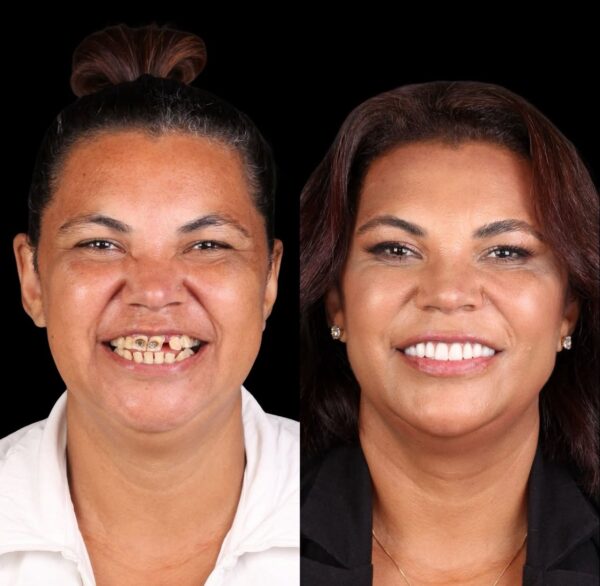
Composite Bonding Before and After Results
Before-and-after photographs can help patients understand the type of changes possible.
However, photographs should be viewed critically.
Lighting, camera angle and editing can significantly influence appearance.
When evaluating a clinic’s composite bonding before and after results, look for cases involving teeth similar to your own.
Pay particular attention to:
- Tooth proportions
- Surface texture
- Gum margins
- Natural symmetry
- Shade
- Edge design
How Long Does Composite Bonding Last?
Composite bonding is not considered permanent in the same way as natural tooth structure.
Its lifespan varies according to:
- Bite
- Oral hygiene
- Diet
- Teeth grinding
- Nail biting
- Material
- Technique
- Location of bonding
- Maintenance
Some patients maintain bonding successfully for years, while others may need repairs or replacement sooner.
Regular dental examinations remain important.
Does Composite Bonding Stain?
Composite resin can stain over time.
Coffee, tea, red wine, smoking and other strongly coloured substances can affect appearance.
Good oral hygiene and professional polishing can help maintain the surface.
Patients seeking maximum long-term colour stability may wish to discuss ceramic veneers as an alternative.
Can Composite Bonding Chip?
Yes.
Composite is durable but not indestructible.
Biting hard objects, opening packaging with teeth, chewing ice, nail biting and teeth grinding can increase the risk of chipping.
One advantage is that damaged composite can often be repaired without replacing an entire restoration.
Composite Bonding and Teeth Grinding
Bruxism is important when planning cosmetic bonding.
Repeated grinding or clenching can place excessive pressure on the bonded edges.
Patients with bruxism should tell their dentist before treatment.
A night guard may sometimes be recommended to help protect dental work.
Ignoring a significant bite or grinding problem can reduce the longevity of cosmetic restorations.
Composite Bonding Aftercare
Good maintenance can help extend the life of bonding.
Patients should:
- Brush regularly
- Clean between teeth
- Attend dental examinations
- Avoid biting extremely hard objects
- Avoid using teeth as tools
- Address teeth grinding
- Maintain good gum health
Your dentist may also recommend periodic polishing.
Can You Eat After Composite Bonding?
Patients can generally return to normal eating relatively quickly, although individual instructions should be followed.
Avoid using newly bonded teeth to bite unusually hard foods or objects.
If local anaesthetic was used, wait until normal sensation returns before eating to reduce the risk of accidentally biting the lips or cheeks.
Is Composite Bonding Painful?
Composite bonding is generally considered a relatively comfortable procedure.
In many cosmetic cases, extensive drilling is unnecessary.
Whether local anaesthesia is required depends on the individual tooth and the treatment being performed.
Patients who are nervous about dental treatment should discuss this during consultation.
Can Composite Bonding Be Removed?
One potential advantage of minimally prepared composite bonding is that it may be more reversible than treatments requiring significant removal of natural tooth structure.
However, removability depends on the original preparation and individual treatment.
Do not assume every bonding procedure is completely reversible.
Ask the dentist how much natural tooth structure will be altered before treatment.
Composite Bonding for UK Patients in Istanbul
Istanbul is particularly accessible for UK dental tourists.
Patients can travel from London and other British cities and combine treatment with a short stay in Turkey.
Before booking flights, establish:
- How many appointments are required
- How long treatment takes
- Whether a review is recommended
- What happens if a repair is needed after returning home
- How remote follow-up works
Allowing some additional time after treatment can be more practical than flying home immediately after the final appointment.
Choosing a Composite Bonding Dentist in Istanbul
Do not select a dentist based only on price or social media.
Ask questions about:
- Dentist qualifications
- Cosmetic dentistry experience
- Composite materials
- Treatment planning
- Bite assessment
- Tooth preparation
- Expected longevity
- Repair and follow-up
- Alternative treatments
A responsible dentist should also be willing to recommend no treatment when bonding is unnecessary.
Frequently Asked Questions About Composite Bonding in Istanbul
How much is composite bonding in Istanbul?
Prices vary according to the number of teeth, complexity, dentist and clinic. Request an individual written treatment plan rather than relying solely on advertised package prices.
Is composite bonding cheaper in Turkey than the UK?
It can be. Istanbul may offer lower cosmetic dentistry costs than private UK treatment, particularly when several teeth are involved.
Does composite bonding damage teeth?
Bonding can be highly conservative in suitable cases. However, the amount of tooth preparation varies, so this should be discussed before treatment.
How long does composite bonding last?
It can last for several years, but longevity varies according to bite, oral hygiene, lifestyle, material and maintenance.
Does composite bonding stain?
Composite resin can become stained over time, particularly with frequent exposure to coffee, tea, red wine or tobacco.
Can bonding close gaps?
Small gaps can often be improved, but larger spaces may require orthodontics or alternative cosmetic treatment.
Is composite bonding better than veneers?
Neither is universally better. Bonding is generally more conservative and affordable, while ceramic veneers can offer greater stain resistance and long-term colour stability.
How many teeth should I have bonded?
Only teeth requiring cosmetic modification should be treated. The appropriate number depends on your smile and individual goals.
Can I have composite bonding in one day in Istanbul?
Some cases can be completed in one day, but larger smile makeovers may require additional planning or appointments.
Can composite bonding create a Hollywood Smile?
It can create a significant cosmetic transformation in suitable patients, although veneers or a combination of treatments may sometimes be more appropriate for extensive changes.
Is Composite Bonding in Istanbul Worth It?
For suitable patients, composite bonding in Istanbul can provide a relatively fast, conservative and cost-effective way to improve the appearance of a smile.
It can be particularly useful for correcting small gaps, chipped teeth, uneven edges, minor asymmetry and selected shape problems without automatically moving to crowns or porcelain veneers.
The best treatment, however, is the least invasive option capable of predictably achieving the desired result.
Patients should not choose composite bonding simply because it is cheaper, just as they should not choose veneers or crowns simply because they appear more dramatic in photographs.
A professional assessment should determine what your teeth actually need.
For UK and international patients considering cosmetic dentistry in Istanbul, Turkey, compare treatment plans carefully, understand exactly what will happen to your natural teeth and choose a dentist who prioritises healthy tooth preservation as well as aesthetics.
With appropriate patient selection, careful smile design, quality composite materials and good maintenance, composite bonding can create a natural-looking improvement while preserving as much healthy tooth structure as possible.