
Single Tooth Dental Implant in Istanbul: Complete Patient Guide
A single tooth dental implant in Istanbul may be considered when one tooth is missing or cannot be saved, and you want to understand a fixed replacement option. Unlike a general guide to implants or full-mouth restoration, this article concentrates on the clinical decisions surrounding one missing tooth: whether to preserve the natural tooth, how the gap is assessed, what an implant-supported crown involves, and how to plan follow-up care if you live overseas. The right decision depends on an individual dental examination, medical history, gum health, bone and bite. No online article can establish your suitability.
For patients travelling from the UK or elsewhere, treatment planning matters as much as choosing the restoration. A single missing front tooth has different cosmetic demands from a missing back molar, while a recently extracted tooth may require a different approach from a gap that has existed for years. The best questions to ask are not simply how much an implant costs or how fast it can be placed, but whether it is clinically appropriate and how its long-term care will be organised.
What is a single tooth dental implant?
A dental implant is a device placed surgic
ally into the jawbone to support a replacement tooth. In a typical single-tooth restoration, the components are an implant fixture, a connecting abutment and a custom-made crown. The implant provides support beneath the gum, while the crown is the part visible when speaking or smiling. Components and clinical methods vary, and not every patient receives each part at the same appointment.
The US Food and Drug Administration’s dental implant patient information describes these components and highlights the importance of discussing health conditions, smoking, healing and maintenance with the treating provider. Implant-supported crowns are intended to restore an individual tooth space, not to replace the clinical need to maintain healthy surrounding teeth and gums.
How does an implant differ fro
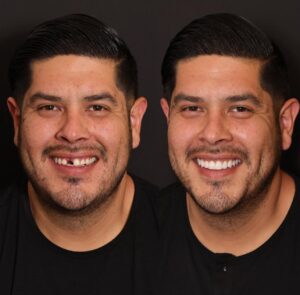
m a conventional bridge?
A conventional tooth-supported bridge often relies on teeth on either side of a gap. An implant-supported crown is supported independently in the jaw and may avoid preparing otherwise healthy adjacent teeth. This distinction can matter when the neighbouring teeth are intact, but it does not automatically make an implant the better choice. The condition of those teeth, available bone, time, cost, aesthetic expectations and ability to keep the area clean should all inform the choice.
Is an implant the same as a crown?
No. A crown is a restoration that replaces or covers the visible portion of a tooth. A crown may be supported by a natural tooth or attached to an implant via an abutment. If your tooth can be restored safely, a crown on your own tooth may be an option. Removing a maintainable tooth solely to receive an implant is not a decision to take lightly.
Who might be suitable for one dental implant?
Adults with one missing tooth may be candidates, but there is no universal qualifying checklist. Your clinician will consider whether the site has suitable bone volume, the condition of nearby teeth, the health of the gums, bite forces, your healing capacity and whether any dental disease needs treatment first. Medical conditions and medicines can also influence a surgical plan.
Patients should disclose smoking or nicotine use, diabetes, previous gum disease, treatment affecting bone metabolism, a history of radiotherapy to the jaws and relevant surgical or medication history. Do not stop prescribed medicine because of information you read online. Discuss these factors with your dentist and, when appropriate, your usual physician.
What if I have gum disease?
Active periodontal disease warrants assessment and management before an implant plan is finalised. Inflamed gums and poor plaque control can make long-term maintenance harder. Even after treatment, a history of periodontal problems may mean more frequent review and more careful home cleaning are needed. Ask what measurements and findings support the dentist’s recommendation.
What if the tooth has just been extracted?
The time since extraction is only one part of the assessment. Some sites may be suitable for immediate implant placement, while others benefit from healing before surgery. Infection, bone walls, gum shape and the possibility of a stable implant position influence timing. Immediate placement must not be confused with receiving a permanent crown immediately; those are separate decisions.
Assessment for a single tooth dental implant in Istanbul
A proper assessment begins with your goals and a dental history. The dentist should identify why the tooth is missing or beyond repair and examine adjacent teeth, the gum line and your bite. Relevant imaging may be recommended to evaluate the bone and nearby structures. Not every person needs the same radiographic examination; the choice should be justified by clinical findings and radiation considerations.
If you are consulting remotely, send existing records securely and ask which parts of an estimate remain provisional. A photo cannot reliably establish the height or width of bone. Request the precise name and address of the clinical provider rather than assuming a website’s geographic brand indicates the present treatment location.
Front tooth versus back tooth planning
A front tooth implant sits in a visually sensitive area. The emergence of the crown from the gum, the height of neighbouring gum margins, tooth shade and smile line may make an otherwise functional result look different from the natural teeth. A back tooth faces substantial chewing forces and may need careful attention to space and occlusion. Both require thoughtful placement, but their priorities are not identical.
When might bone grafting be considered?
Bone can change after tooth loss, especially if the gap has remained empty for a long time. When available bone is inadequate, a dentist may consider grafting or another approach. Grafting adds its own considerations, cost and recovery time and may make treatment longer. It is not inevitable for every implant and should never be advertised as universally unnecessary.
The procedure: from planning to the final crown
1. Diagnosis, options and informed consent
The clinician evaluates the gap and explains reasonable alternatives: keeping and restoring the existing tooth if feasible, a bridge, a removable replacement, or leaving the space for the moment when clinically appropriate. They should discuss expected benefits, limitations, risks, and what will happen if the proposed implant cannot be placed. Obtain a written plan with material and component details.
2. Preparing the site
If extraction, gum treatment or bone augmentation is required, it may happen before implantation or, in selected cases, during a related appointment. The sequence depends on tissue health and the proposed restoration. You should know whether additional procedures are included in your estimate and what changes could be necessary after examination.
3. Implant placement
During the surgical stage, the dentist prepares the planned site and places the fixture in the jawbone. Local anaesthesia is commonly used; additional approaches to anxiety or sedation require individual evaluation and suitable facilities. Ask who will perform surgery and how sterile technique, surgical planning and post-operative instructions are managed.
4. Healing and integration
Healing is a biological process, not a fixed calendar promise. The implant needs to achieve appropriate stability and integration with bone before it can reliably support the intended restoration. The American Academy of Periodontology explains that implant-to-bone healing commonly occurs over a period of months. Your dentist decides when it is appropriate to progress, based on the particular case.
5. Abutment and custom crown
Once the site is ready, the restorative dentist takes impressions or digital scans and plans the final crown. Material, shade, contour, bite and cleanability should be reviewed. The crown needs to fit surrounding teeth and be maintainable around the gum margin. Patients should understand what is temporary and what is final, particularly when leaving Turkey between appointments.
How many visits to Istanbul will I need?
There is no reliable one-size-fits-all number of days for implant treatment. Some plans require separate appointments for surgical placement and final crown fitting; grafting or complications can introduce other stages. A trip that covers an initial assessment and one procedure may not complete the entire restoration. Do not arrange irreversible travel on the assumption that a permanent implant crown is always delivered during a short visit.
Request a proposed schedule with the purpose of each appointment and the clinical conditions that could change it. If you live in Britain, ask the clinic whether a return journey may be required, how long the interval might be, and whether interim reviews can be arranged locally. An online estimate should never be represented as a confirmed surgical schedule.
Travel questions before paying a deposit
- Who is the licensed healthcare provider and where exactly is the appointment?
- Which stages are expected on the first visit, and which are conditional?
- Could I need a second or additional trip for the crown?
- What happens if infection, bone loss or another issue is found?
- What written instructions and treatment records will I take home?
- Who is responsible for emergency advice after I return?
- What is included and excluded from the quote?
For a broader travel planning checklist, read our contact and consultation page. If that guide is not yet published, its information should be treated as an internal editorial resource rather than a live destination.
Single tooth implant cost in Istanbul: what affects the quote?
The cost of a single tooth implant can vary with the implant system, clinical complexity, diagnostic investigations, possible extraction, grafting, the abutment, crown material and aftercare. A quote for the fixture alone cannot be compared fairly with a quote that includes the final crown. Clinics may differ in what they classify as an additional procedure. Request a breakdown rather than relying on a headline price.
Because no current clinic price list has been verified for this website, this guide does not publish a specific price or offer. It is more useful to ask for an itemised proposal stating which parts are estimates, what is payable at each stage, and what happens if the treatment plan changes after imaging.
What should be included in an itemised estimate?
- Initial examination and any necessary radiographic assessment
- Extraction or management of disease if needed
- Implant system and surgical placement
- Any proposed grafting, separately identified
- Temporary restoration if required
- Abutment and final crown, including material
- Review appointments, instructions and aftercare arrangements
- Possible additional travel or corrective treatment costs
Benefits, limits and potential complications
An appropriately planned implant crown may provide a fixed replacement without relying on the adjoining teeth for support. It can help with chewing and appearance and may contribute to maintaining bone in the area. These potential advantages depend on healthy surrounding tissues and appropriate long-term maintenance; implants are not identical to natural teeth and are not guaranteed to last for life.
Risks include infection, delayed healing, implant failure, problems with the gum or bone, injury to nearby teeth or anatomical structures, altered sensation, and mechanical issues with the crown or connecting components. Not every complication occurs immediately. Ask the treating dentist about risks specific to your anatomy and health, what warning signs warrant review, and what management would involve.
What should prompt urgent attention?
Follow the personalised instructions you receive after surgery. Contact your treating clinician for unexpected pain, persistent bleeding, significant swelling, an unstable restoration or other concerning changes. Seek urgent medical or dental care for rapidly worsening symptoms, difficulty breathing or swallowing, or uncontrolled bleeding. Do not depend on an international messaging service for emergencies.
Implant aftercare and long-term maintenance
Keeping an implant healthy requires consistent oral hygiene and professional review. Your dentist may recommend a soft toothbrush and suitable interdental cleaning aids, with advice tailored to the restoration and healing stage. Avoid introducing devices or aggressive cleaning at a healing surgical site unless advised by the clinician.
Although an implant cannot develop decay in the same way as a natural tooth, the tissues around it can become inflamed or diseased. Plaque control, gum health, regular assessment and attention to bite or grinding habits remain important. Attend review appointments even when the crown feels comfortable.
Records to take home
Ask for the implant brand and model, component identification where available, treatment dates, a record of any grafting, relevant imaging, the crown material and follow-up instructions. These details may be useful to another dentist if repair or maintenance becomes necessary. Keep copies in a secure location rather than relying on a messaging thread as your only medical record.
Alternatives to an implant for one missing tooth
An implant is not the only solution to a single gap. A conventional bridge can be considered when the neighbouring teeth need restorations or an implant is unsuitable. A removable partial denture may suit certain clinical or personal circumstances. In some cases, orthodontic movement or a decision to maintain the space under observation may be discussed. The pros and cons are individual.
The NHS overview of dental treatments describes implant-supported replacement as one approach among several. A balanced consultation should cover options, not just promote one procedure. If an existing tooth might be saved with suitable care, ask why extraction is being recommended and whether a second clinical opinion is appropriate.
Choosing a provider when travelling for an implant
Before booking an appointment in Istanbul, check the provider’s actual address and healthcare authorisation, the identity and qualifications of the treating dentist, and the arrangements for informed consent and follow-up. Ask how a change in the plan will be explained and priced. Be cautious about guaranteed success, unrealistic timeframes and reviews that cannot be independently verified.
A strong treatment relationship also means clear communication. Ask whether the person discussing the treatment online is the clinician who will examine you, whether the consultation is in a language you understand, and whom you can contact once back home. If a provider cannot explain the alternative options or refuses a written itemised plan, consider seeking another opinion.
Frequently asked questions
Does a single tooth dental implant hurt?
The procedure is usually planned with anaesthesia, but individuals differ in their experience of discomfort and recovery. Your clinician should explain how pain will be managed and which symptoms are not expected. No procedure should be promised as completely painless.
Can I get an implant immediately after extraction?
Sometimes. Immediate placement depends on site conditions, infection status, bone and gum support, and a clinician’s assessment. It does not mean the final crown can always be fitted immediately.
How long does a single tooth implant take to heal?
Integration and soft-tissue healing vary between people and procedures. Several months may be needed before the definitive crown, and additional grafting may alter the timing. Your dental team should determine when each stage is appropriate.
Is an implant better than a dental bridge?
Neither approach is universally better. An implant may preserve adjacent tooth structure, while a bridge may be preferable in other circumstances. Compare tooth condition, bone, surgical risks, cleaning requirements, cost and maintenance with your dentist.
Will my new implant tooth look natural?
An appropriately designed crown can be made to harmonise with nearby teeth, but the outcome depends on gum shape, bone, crown material, shade, surrounding teeth and smile line. Front tooth replacements can be particularly demanding, and exact cosmetic results cannot be guaranteed.
Can smokers or people with diabetes receive implants?
Some may be candidates, but smoking and medical conditions can affect risk and healing. A detailed medical and dental assessment is necessary. Never assume a social media testimonial establishes your own suitability.
How should I compare implant quotations in Istanbul?
Ask whether each quote includes the implant fixture, surgery, abutment, definitive crown, imaging, provisional replacement, grafting if needed, and reviews. Also consider travel and future maintenance. Compare written clinical plans rather than isolated prices.
Can my UK dentist provide follow-up care?
Possibly, but you should discuss arrangements before travelling. A local dentist may need accurate implant system details and treatment records and may not agree to assume responsibility for all complications. Make the follow-up plan explicit.
Request information about a single tooth implant consultation
If you are considering replacing one missing tooth, a sensible first step is to request an individual assessment and a written explanation of treatment options. Contact Dentist in Taksim to ask about consultation arrangements, the current treating clinic and the records to prepare. You may also send an enquiry via WhatsApp using the contact number displayed on the website; verify the current number and appointment location directly before travelling.
For readers comparing more extensive treatment, the existing guides to full-mouth dental implants and All-on-4 implants discuss different clinical situations. One missing tooth deserves its own careful plan, not a one-size-fits-all treatment promise.


