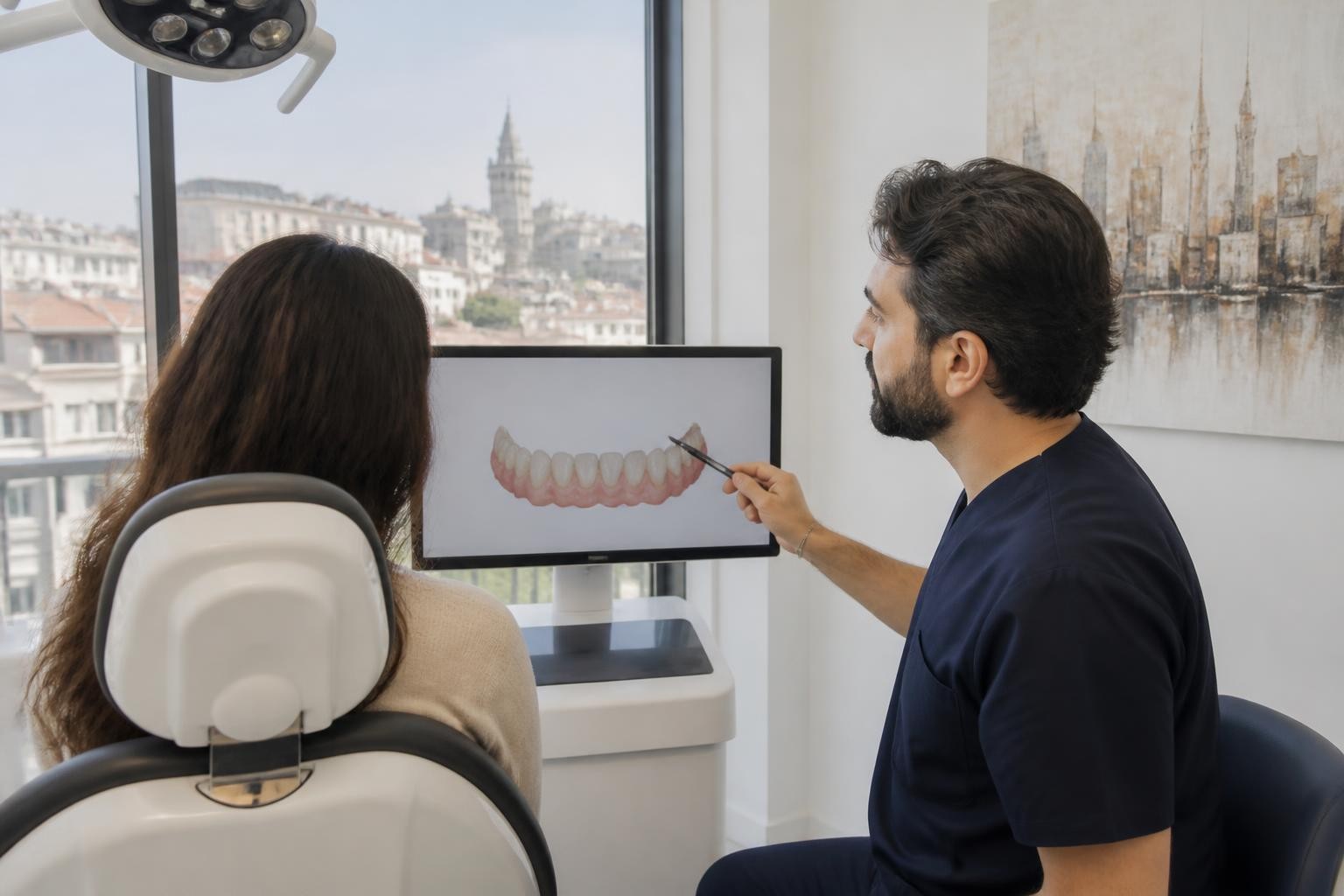
Emergency dental care in Istanbul for visitors should start with symptom triage and appropriate medical advice. This guide covers broken teeth, toothache, swelling, urgent appointments, travel insurance and the current Şişli location.
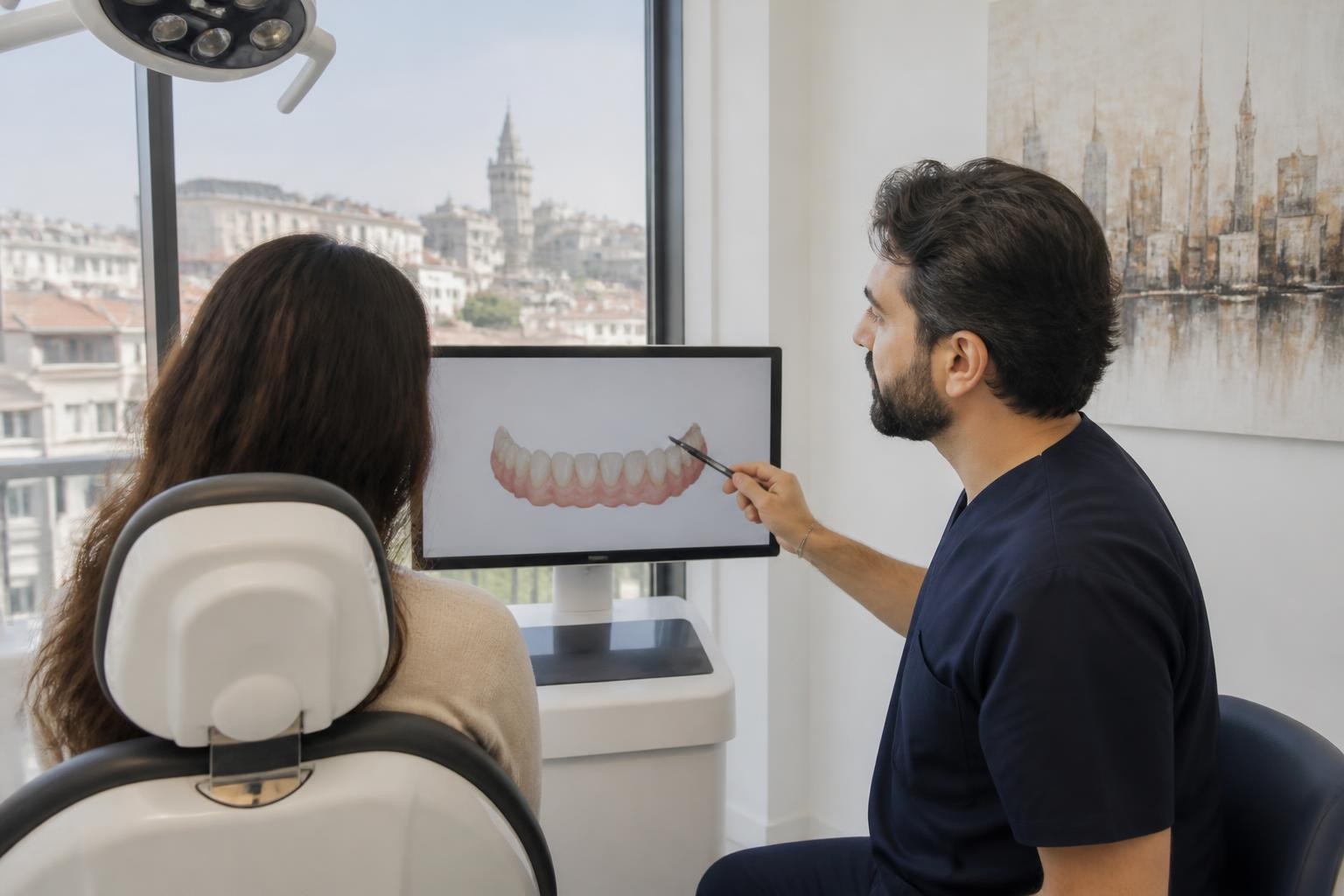
What to do first when dental pain starts abroad
Emergency dental care in Istanbul begins by deciding whether you need an immediate hospital response or an urgent dental examination. Severe toothache, a cracked tooth, a lost crown or swelling can interrupt a holiday, but they do not all carry the same degree of risk. Seek an appropriate professional assessment rather than relying on photographs or over-the-counter products to diagnose the cause. This guide is designed for visitors from the UK, Ireland, US, Canada and Australia who may not know Istanbul’s healthcare arrangements. The availability of a private dental appointment is not guaranteed and depends on the provider’s actual operating schedule.
Danger signs requiring immediate medical help
Severe swelling affecting your throat, neck or eye region, difficulty breathing or swallowing, uncontrollable bleeding and serious facial injuries may require emergency medical attention rather than a routine dental visit. In Türkiye, call 112 for emergency services. Do not spend time searching for a cosmetic clinic or waiting for a message reply when symptoms are dangerous. Spreading infection can become serious and may require hospital-based treatment. Inform the healthcare team about medicines, allergies and other relevant conditions. The NHS toothache guidance explains important emergency warning signs. Online guidance cannot replace emergency assessment.
When an urgent dental appointment may be appropriate
A painful fractured tooth, continuing toothache, a loose filling, a damaged crown or a suspected dental abscess often requires timely dental evaluation. A small chip with no pain may need a different response from swelling associated with fever. An urgent appointment is intended to establish the diagnosis and make a safe plan, not necessarily to complete every possible long-term treatment. If your symptoms get worse, seek further advice promptly. The NHS urgent dental information explains general principles; its UK appointment system is not a booking service for Türkiye.
Toothache while visiting Istanbul
Toothache may be caused by decay, damaged restorations, inflammation, gum disease, tooth fractures or infection. Pain severity alone does not reveal the diagnosis. Avoid chewing on the affected side and avoid extremely hot, cold or sweet food if it aggravates pain. Ask a pharmacist or clinician about suitable pain relief, accounting for other medicines, allergies, pregnancy or medical conditions, and follow package directions. Do not place aspirin against the gums, use industrial chemicals or take leftover antibiotics. Toothache with increasing swelling, fever or difficulty opening the mouth needs urgent assessment. A temporary improvement does not necessarily mean the underlying condition has resolved.
Broken tooth and chipped enamel
A broken tooth may involve only enamel, or damage may extend deeper into the tooth. Sensitivity, pain while biting or a sharp edge can indicate that professional assessment is needed. Preserve any fragment if it can be handled safely and tell the dentist how the incident happened. Depending on the clinical findings, treatment might involve smoothing, bonding, a temporary restoration, a crown or more extensive care. A photograph cannot reliably indicate whether internal damage exists. Avoid chewing hard food on the affected side until assessed. If an accident also caused facial injury or loss of consciousness, seek medical care. A rushed cosmetic repair is not a substitute for diagnosis.
What if a crown or filling falls out?
A loose crown, bridge or filling may leave part of a tooth exposed and sensitive. Keep the restoration if you can do so safely, but do not attach it with household glue. Sometimes a dentist can assess whether an existing crown can be recemented; in other circumstances decay, fracture or damage may require additional treatment. The condition of the underlying tooth matters more than simply replacing the visible component. Describe the affected tooth and any associated pain when contacting a clinic. For background on materials and treatment decisions, see our zirconium crown guide and crowns versus veneers comparison.
Knocked-out permanent tooth
A knocked-out permanent tooth is time-sensitive and requires immediate dental assessment. Handle the tooth by the crown and avoid rubbing the root or cleaning it with harsh solutions. Seek professional instructions urgently on safe storage and transport. Do not reinsert a baby tooth. Dental trauma can also damage the jaw or soft tissues, and serious injuries may require hospital evaluation. Tell the clinician how the accident occurred and when it happened. Rapid professional assessment may affect the available options, but outcomes cannot be guaranteed. Do not postpone the visit to finish sightseeing or assume that a knocked-out tooth is merely a cosmetic problem.
Dental abscess and swelling
A suspected dental abscess can be associated with throbbing pain, swelling, fever and an unpleasant taste. Infections do not reliably disappear with home remedies. A dentist needs to assess the source and determine the appropriate treatment; antibiotics alone may not resolve the underlying dental cause. Worsening facial swelling, difficulty swallowing, trouble breathing or serious systemic illness requires emergency medical help. Do not attempt to puncture or drain a swelling yourself. The NHS dental abscess patient information explains why prompt assessment is important. The treatment pathway depends on the extent of infection and individual health.
How to request a dental assessment
Explain the symptom, when it began, whether pain is constant, whether there is swelling or fever and whether an injury occurred. Mention medicines, allergies, existing crowns, implants or recent dental treatment. Share how long you will remain in Istanbul, but do not pressure a clinician to promise a complex procedure before examination. Ask whether an appropriately qualified dentist is available to assess your complaint and whether imaging or referral may be required. An online request is an enquiry only; it does not guarantee immediate access or twenty-four-hour service. Patients with dangerous symptoms should call 112 or attend an emergency department instead of waiting for a routine clinic reply.

A first visit may provide temporary treatment
The initial appointment may involve clinical examination, discussion of symptoms and investigations that are justified by the findings. Depending on diagnosis and circumstances, a dentist may recommend a temporary filling, pain relief advice, infection treatment, referral or a longer procedure. It may not be appropriate to complete complex restorative treatment shortly before an international flight. Ask what can be safely done during your stay and what follow-up is required after returning home. Request a written summary and any relevant records. A temporary restoration should not be confused with definitive treatment, and patients should understand warning signs that require further attention.
Cost and travel insurance considerations
The fee depends on consultation, imaging when clinically justified, any immediate treatment and subsequent appointments. An advertised consultation charge may not include the cost of treatment. Ask for a clear written estimate where possible and keep receipts and clinical records for a potential insurance claim. Travel insurance policies differ in whether they cover urgent dental care, exclusions for pre-existing problems and reimbursement requirements. Confirm coverage with your insurer rather than assuming every procedure will be funded. Avoid choosing a provider only because it advertises a low price or claims all procedures can be completed instantly. Clinical appropriateness and safety take priority over speed.
Why the clinic is in Şişli, not Taksim
Dentist in Taksim is the established website name, but the clinic’s current published location is in Şişli, Istanbul. The listed address is Abide-i Hürriyet Caddesi No:179, Şişli; verify your destination and appointment arrangements directly before travelling. Visitors staying in Taksim, Beşiktaş or Galata should plan their journey accordingly rather than assuming the practice remains near Taksim Square. Current opening hours and urgent availability have to be confirmed. Read the relocation announcement and use the contact and location page for enquiries. Severe medical emergencies should go to appropriate emergency services.
Information international patients should request
Visitors from the UK, US, Canada and Australia should ask how treatment options and consent are explained, how costs are documented and whether records can be supplied in a suitable format for their dentist at home. Mention your return flight, but allow the clinician to determine safe timing. Some injuries or infections need review rather than a one-visit solution. Ask whether prescribed medication has implications for travel and whether a temporary restoration needs definitive work. Our international patient planning guide and UK visitor guide cover practical preparation questions. Neither replaces clinical triage.
Aftercare and warning signs
Follow individual instructions after any dental treatment. Keep medication details, clinic contact information and records of the procedure. Some discomfort may occur after dental intervention, but escalating pain, fever, spreading swelling or ongoing bleeding requires prompt review. Trouble breathing or swallowing is a medical emergency. Do not take unprescribed antibiotics or repeatedly apply cosmetic products to a painful area. Ask the treating dentist whether you may fly, chew normally and wait until returning home for any remaining treatment. If you have a temporary restoration, arrange the follow-up recommended by the clinician. Good aftercare planning can matter as much as the initial urgent visit.
How to evaluate a dental provider
Look for clearly identified qualified clinicians, an explanation of consent and possible risks, an appropriate legal operating setting and transparent written costs. Do not rely solely on testimonials, dramatic before-and-after pictures or claims of guaranteed painless treatment. Ask which services can actually be offered during the hours you need and whether the team will refer you if the problem requires hospital care or a specialist. Be cautious of any clinic that dismisses dangerous swelling or promises antibiotics without assessment. Our patient standards page provides questions to consider when evaluating a dental service in Istanbul.
Common questions about urgent dental care
Can I book an emergency dentist today?
Contact a licensed provider for current availability. This page does not promise a same-day appointment.
What number should I call for a serious medical emergency?
Call 112 in Türkiye.
Is toothache always an emergency?
No. Severity, duration and associated symptoms determine urgency; persistent or severe symptoms need assessment.
Should I take antibiotics for a dental abscess?
Do not self-prescribe. A dentist must evaluate the source and treatment.
Can a loose crown be repaired?
Possibly, depending on the crown and underlying tooth.
Is the clinic still in Taksim?
The currently published location is in Şişli; confirm details before travelling.
Arrange appropriate next steps
If you need non-life-threatening emergency dental care in Istanbul, use the contact page to request information about the earliest suitable assessment. Include a concise symptom description and your travel dates. A clinician must determine what evaluation or treatment is clinically appropriate. Do not send passport scans or sensitive payment information through unverified public channels. If you have breathing difficulty, severe swelling or major bleeding, contact emergency medical services now rather than waiting for an online reply. This article is educational only and cannot diagnose, prescribe or promise availability or a specific outcome.